


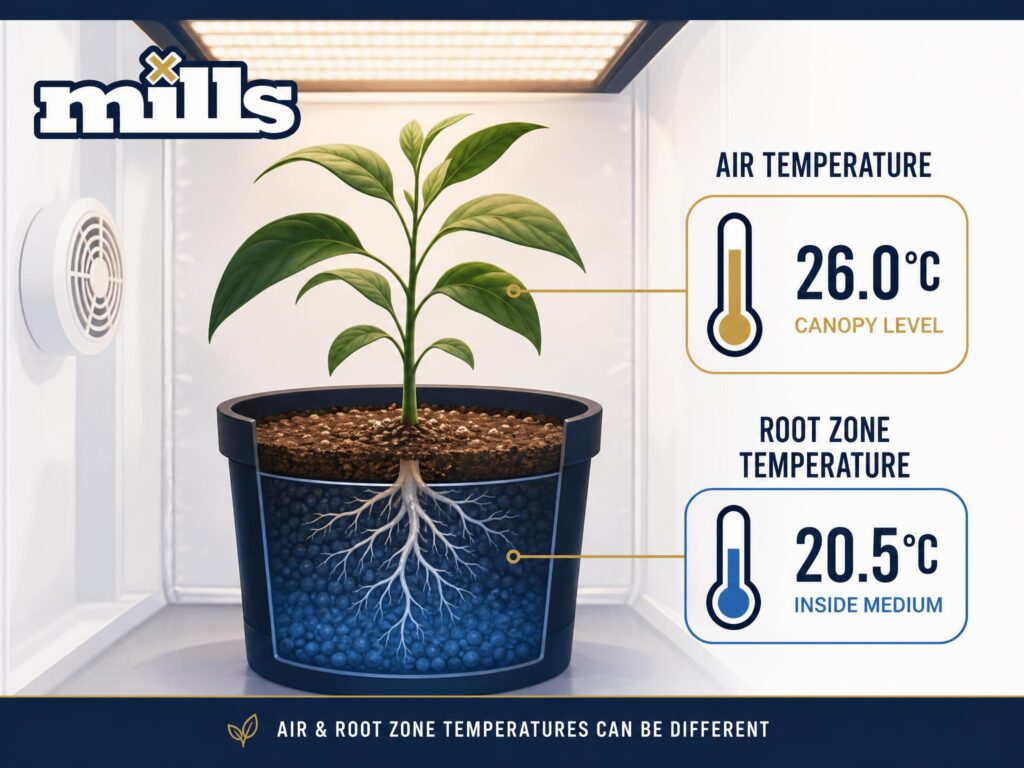
When a plant slows down, growers might frantically check every inch of the room. Air temp, humidity levels, lights, airflow, pH, EC, ABC, X, Y, and Z. And they are not wrong to check all environmental factors, but if you don’t check the root zone temperature, the more important story might go untold.
Ever felt cold when everyone and everything else is warm? A grow room can go the same way. The pots might feel warm, but the substrate and water around the roots are too cold. When that happens, the plant does not always respond by shivering or wrapping a scarf around its neck. It could grow slowly, drink less, and take up fewer nutrients.
All the feed a plant needs might be served on a plate, but if the roots are colder than a day-old bath, the plant cannot take on board the nutrients it needs. Cold roots present challenges, especially in early growth or after transplanting. At those key stages, a plant needs steady root activity to build momentum. That’s why Mills uses Start R to support root formation and transplant recovery.
Root Zone Temperature and Growth: What Happens When Roots Get Too Cold
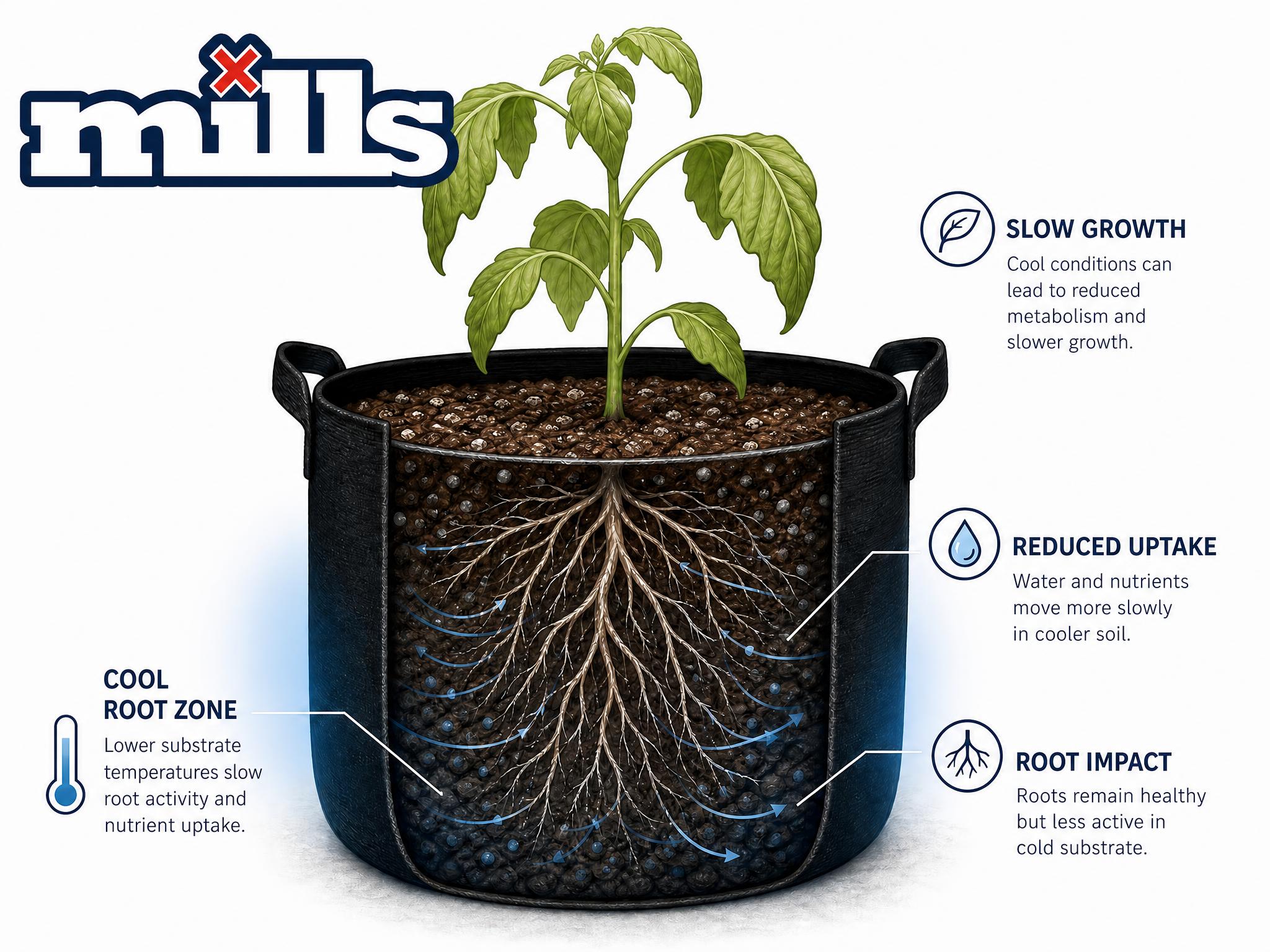
Cold roots do not stop working completely, but they do slow down. The root zone is where water and nutrients are taken up, so when that area gets too cold, it doesn’t work as well. The first sign is often slower drinking. The growing medium may stay wet for longer because the plant is not pulling water through efficiently.
Nutrient uptake can also slow down. The feed may be mixed correctly, the pH is in range, and Basis A&B is right there in the mix, but cold roots are not in the best position to use it properly. That is where problems can start to look confusing.
A cold root zone can make a healthy plant look lazy. Shock recovery takes longer, and early momentum gets harder to build. It is not in your face at first, but it creeps up on you before long.
Why More Feed Does Not Fix Cold Roots
When a plant looks slow, pale or generally a bit depressed, it is tempting to feed it more to make it happy. More nutrition feels like the obvious answer, especially if the plant doesn’t look like it’s getting what it needs. But if the root zone is too cold, adding more feed can miss the point.
Nutrients being available is not the same as nutrients being taken up by the plant. Cold roots equal slower roots. They consume less and work less by moving nutrients through the plant more slowly. So, if the problem is temperature, extra feed can end up sitting there like it’s in the wrong grow room.
Growers beware: cold roots can make a plant look hungry, but the feed might not be the issue. Basis A&B can provide the core nutrition, but the roots still need the right conditions to use it properly. By checking the root zone before changing the feed, you give the nutrients a better chance of doing what they are designed to do.
Root Zone Temperature and Growth: Start R and Early Root Momentum
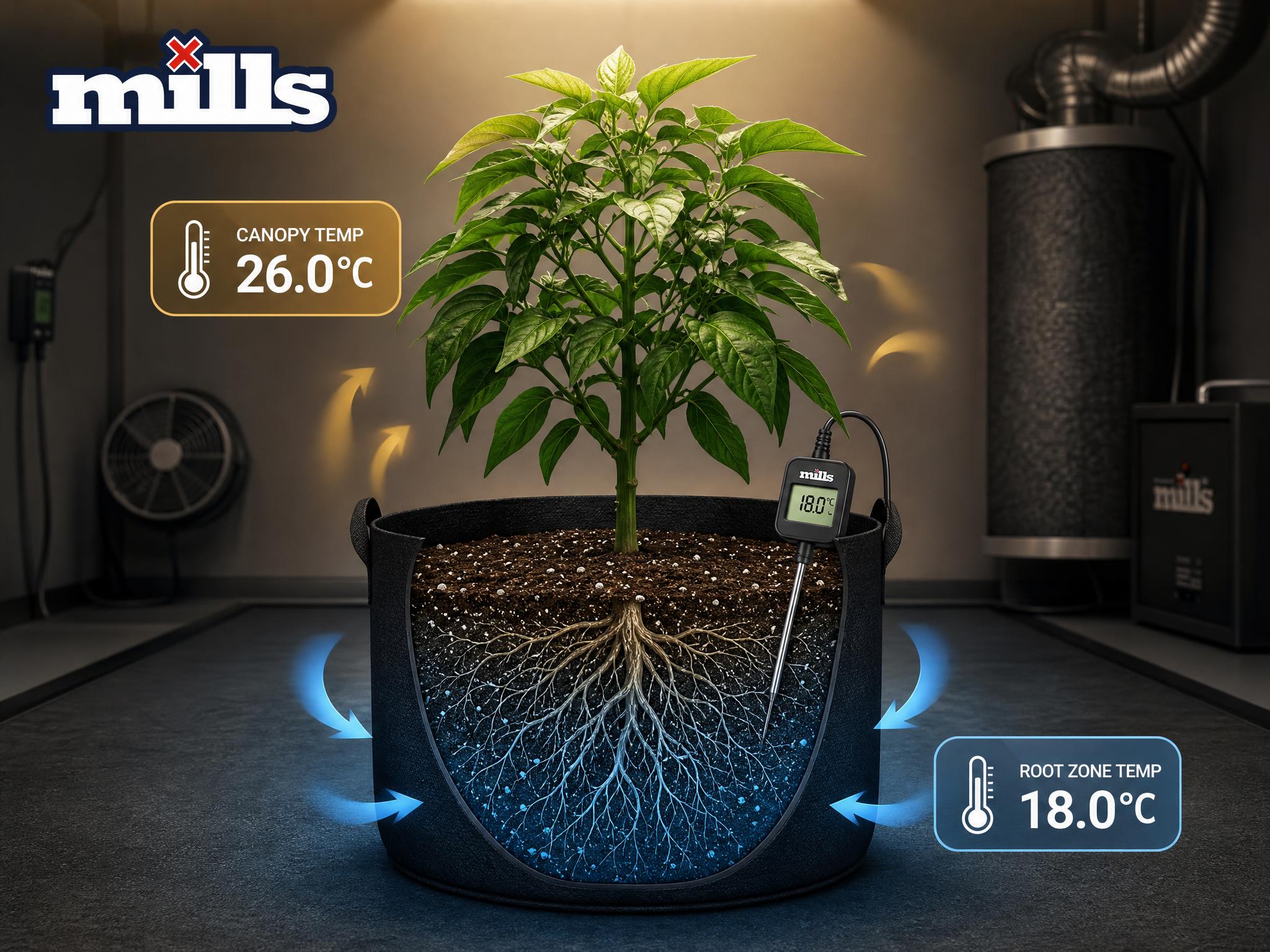
The more pressure a plant is under, the bigger a problem cold roots become. Early growth and transplanting are two of the most stressful times for a plant. The plant is trying to establish itself, build roots and settle into the growing medium. If the root zone is too cold at that point, it won’t stop, but it won’t be in a hurry to get growing either.
That is where Start R earns its Mills stripes. It is designed to support root formation, early growth and transplant recovery, making it a natural fit when the plant needs help building momentum below the surface. The key thing about Start R is knowing what it does and what it does not do. Start R will support the plant, but it won’t replace good growing conditions. If the root zone is chilling for all the wrong reasons, the environment needs to be fixed before any growing product can do its best work.
Used properly, Start R helps support the early root activity the plant needs to get moving. Pair that with a steady root zone temperature, and the crop has a much better chance of settling in, feeding properly and building growth without dragging its heels from day one.
Basis A&B Works Best When Roots Are Ready
Basis A&B is like the backbone of the Mills feeding system. It provides the plant with core nutrition, but even the best feed still needs a healthy, active root zone to make proper use of it. Sometimes it’s easy to forget that nutrients don’t just work because they’re mixed in correctly; the plant needs to absorb them. And it can’t do that properly when the root zone is colder than the room temperature suggests.
This is why cold roots can sometimes make feed charts seem confusing. The answer to cold roots is not to feed harder, but to check smarter. By turning up the metaphorical root zone thermostat, you can let Basis A&B do its thing.
How to Spot a Cold Root Zone
Cold roots do not always announce themselves clearly. The plant might not look frozen or damaged. It might just look slow, pale, tired or unwilling to get on with what it’s supposed to be doing.
One common sign is a pot that stays wet for too long. If the plant is drinking slowly and the growing medium is taking ages to dry back, temperature could be a factor. Slow uptake, delayed recovery after transplanting and weak early growth can all point in the same direction.
The easiest check is the obvious one: measure the temperature where the roots actually are. Do not rely only on the room reading. Check the pots, the substrate and the water going into the tank. A warm canopy does not always mean a warm root zone.
Root Zone Temperature and Growth: Keep the Roots Fit for Work
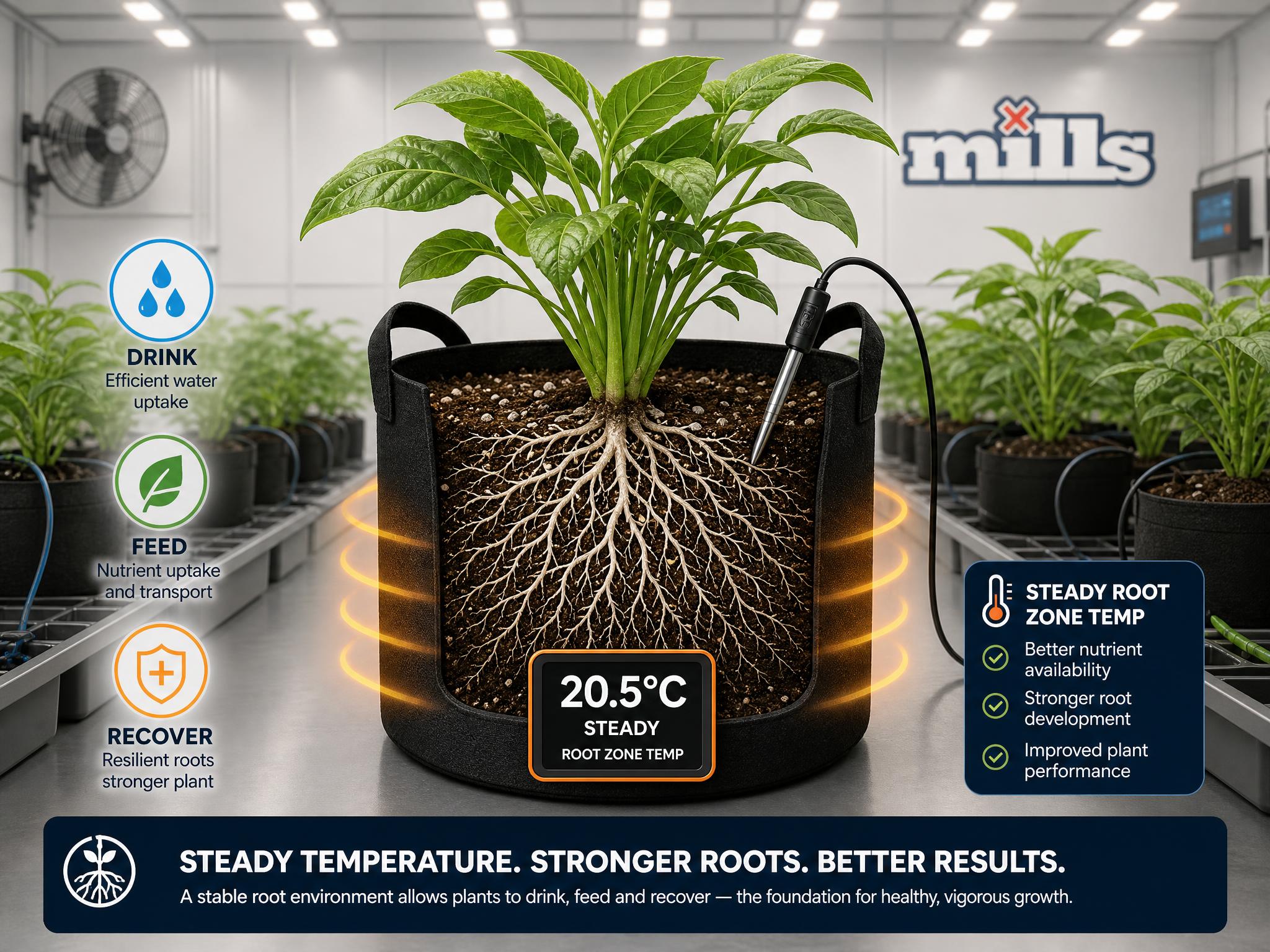
Cold roots are easy to miss because the problem starts below the surface. Things up top might appear fine and dandy, but things are slowing underneath. The best move is to check before you correct. Look at the root zone temperature, the water going into the medium and how slowly the plant is taking up water and nutrients. If the roots are cold, fix the environment before pushing the feed harder. Start R can support root formation and transplant recovery, while Basis A&B provides the core nutrition the plant needs throughout the crop. But both work best when the roots are active enough to do their job.


