


Why pH Balance Matters: Optimal pH for Plant Growth
You can get the nutrients right. You can water on time. But if your pH is off, none of it sticks. That’s the harsh truth of plant nutrition and the reason why smart growers make optimal pH for plant growth their top priority.
Whether you’re running soil, coco, or hydro, optimal pH dictates how much your plant can actually absorb. Get it wrong, and even the best feed will leave your plant hungry. Get it right, and everything flows more smoothly, from early veg to flush.
Let’s break down the optimal pH for plant growth, why balance matters across different growing mediums, and how Mills Nutrients are the one-stop shop for everything you need.
Optimal pH for Plant Growth: What pH Actually Controls in Your Grow
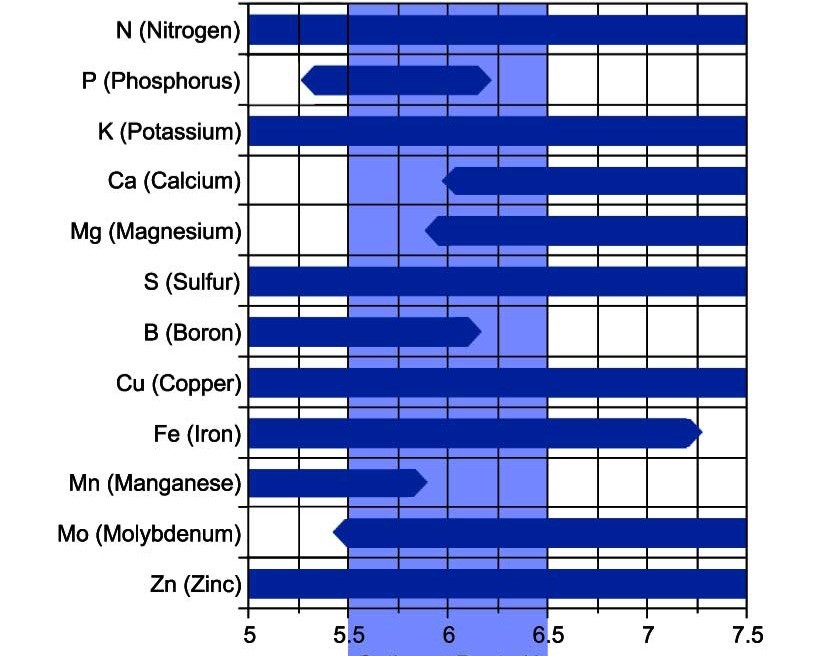
pH is short for potential hydrogen. What it does is control the availability of nutrients. Every element your plant needs: nitrogen, phosphorus, potassium, calcium, magnesium, and micronutrients. They all get absorbed better at specific pH ranges. When pH levels drift outside the optimal range, certain nutrients become unavailable. It’s not that they’re missing, it’s that the plant can’t use them.
This is where problems usually pop up:
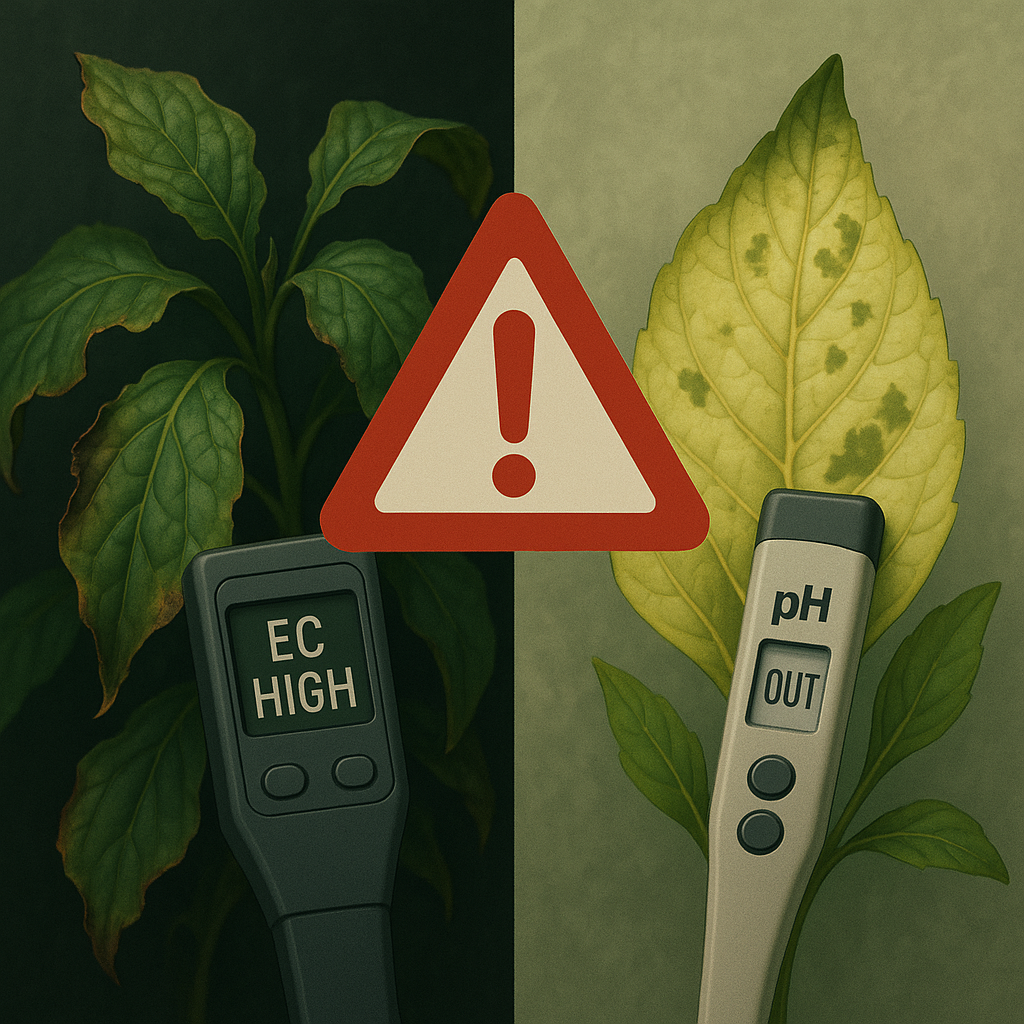
- Yellowing or burnt tips are a sign that the pH is out of whack. This can occur even with proper feeding.
- Deficiencies that look like overfeeding but are actually lockout caused by incorrect pH
- Nutrient lockout that builds silently until it breaks your cycle
Optimal pH for Plant Growth: Different Mediums, Different Ranges
Each medium has its own pH requirements.
Soil
- Ideal pH range: 6.0 – 6.8
- Soil buffers pH naturally, especially if you’re using organic matter or compost
- Easier to manage but slower to adjust if things go wrong
Coco
- Ideal pH range: 5.8 – 6.2 (See our Coco blog for top tips)
- Coco is inert and will reflect whatever you feed it.
- Tighter range = more control, but also more responsibility
Hydroponics
- Ideal pH range: 5.5 – 6.0
- There’s no buffer at all; this drive is manual all the way.
- Small changes can make a big difference, so monitoring is crucial.
pH rotation for coco and hydro
In Coco and Hydro, a single pH target can be too rigid. A simple rotation works better because nutrient availability shifts across the range. Example: run one feed at 6.2, then 5.5, then 6.0, and repeat. Use the pH chart as your reference and keep your readings consistent.
How Mills Helps You Stay in Range: Optimal pH for Plant Growth
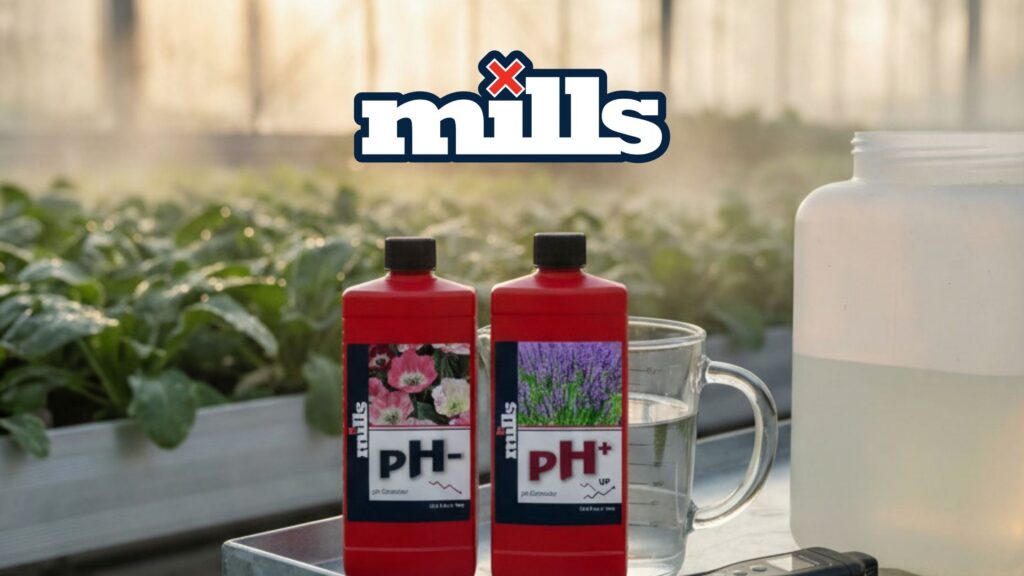
The Mills system is all about pH stability. Ranging from Basis A&B, which balances effortlessly with most water sources, to Start-R, C4, and Ultimate PK, which integrate without causing spikes or crashes. If your water is particularly hard or soft, or if you’re running RO, you’ll want to stay on top of adjustments. That’s where Mills pH– and pH+ come in.
- Mills pH– uses nitric and phosphoric acid, which is better for plants and more stable than weaker citric-based formulas.
- Mills pH+ is potassium-based and designed to correct low pH cleanly, without overcompensating or affecting EC too aggressively.
And because Mills products are clean and salt-balanced, you don’t get the wild pH swings caused by bloated feeds or clashing additives.
Mills Tips to Stay Balanced
- Always check the input before feeding
- Once per week, run CalMag water only at 1 ml per 1 L, pH 6.5, with no other nutrients. This applies to all substrates and hydro. If a plain water event is not possible, apply the same CalMag water as a foliar spray once per week, covering both sides of the leaves and the stem, at 1 ml per 1 L and pH 6.5. Yes, that is higher than the usual coco feed range. It is a standalone CalMag water event, not your normal nutrient mix.
- Measure runoff (especially in coco or hydro) – if it fluctuates, your root system is signalling that it’s not happy, and you need to make adjustments.
- Adjust after mixing nutrients, not before. Nutrients affect pH, and timing matters; you need to allow some time for the root system to process what you feed it.
- Use clean tools. Dirty probes and contaminated measuring cups throw off readings more than you’d think
- Avoid chasing a perfect stay within the optimal range, rather than aiming for an exact number. Perfect is the enemy of good.


