



Nutrient Deficiencies in Plants: How to Spot and Fix Them
Plants do not complain. They just sulk in silence until leaves curl, colours fade, and your diary fills with guesswork. This is your no-drama guide to spotting nutrient deficiencies and fixing them fast. Clean checks, clear signals, and practical solutions you can run today.
First rule: do not treat the wrong problem
Most “deficiencies” are actually availability problems. Before you reach for any bottle, run this quick reset:
- Check pH. Keep it in range: soil 6.0–6.5, hydro 5.5–6.0. If pH drifts, nutrients lock up, and healthy meals turn into window shopping.
- Check EC. Too strong and you burn. Too weak and you starve. Aim for steady progress, not hero numbers.
- Check the water source. RO and soft water need a calcium and magnesium baseline, or the rest of your feed will wobble.
- Check pests and the environment. Heat spikes, cold roots, gnats, and poor airflow will copy the look of deficiency.
If any of those are off, fix them first. You cannot feed your way out of bad fundamentals.
What the leaf is trying to tell you
Symptoms show up in patterns. Use the patterns to narrow the cause.
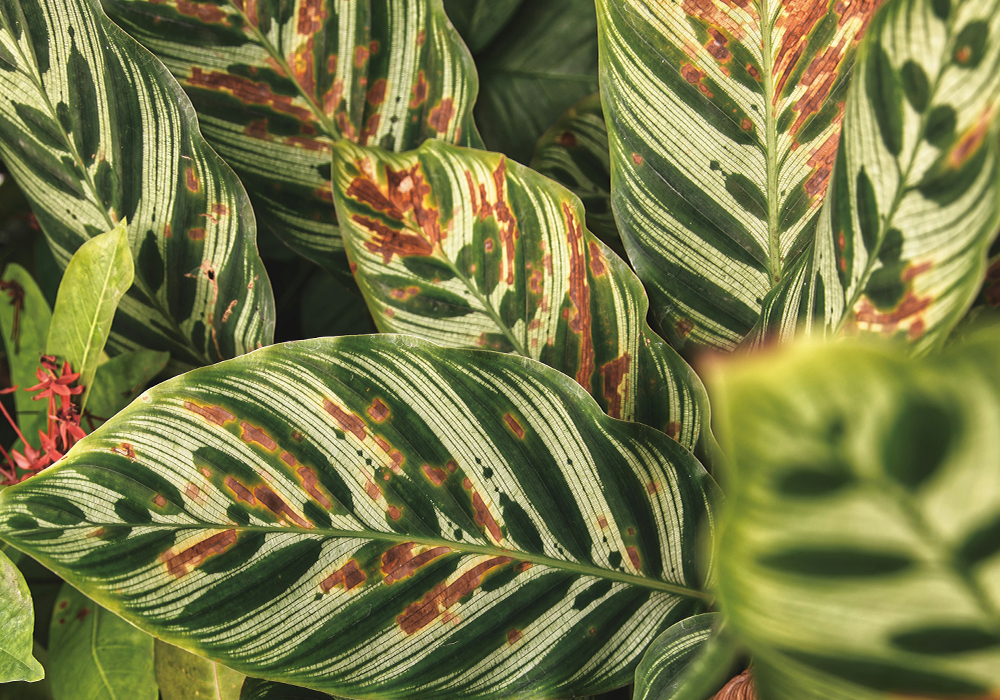
Mobile nutrients: symptoms start on older leaves
- Nitrogen: General pale green that marches from the bottom up. Slow growth. Fix with a balanced base feed and sensible veg rates.
- Phosphorus: Dark, dull leaves with a blue or purple cast. Cold roots make it worse. Ensure root warmth, then support with a bloom-balanced profile.
- Potassium: Burnt tips and edges on older leaves, weak stems and tired flowers. Often linked to low K in bloom or wild EC swings.
Immobile nutrients: symptoms hit new growth first
- Calcium: Crinkled new leaves, tip dieback, weak cell walls. Common in RO or soft water. Look for small brown spots as a classic sign of calcium shortage.
- Magnesium: Interveinal yellowing on mid to upper leaves that spreads between veins while veins stay green.
- Iron: New growth turns yellow to white while older leaves stay green.
- Sulfur: Uniform pale new growth, a bit like nitrogen, but it starts at the top.
- Zinc: Tiny leaves, tight internodes, mottled chlorosis at the top.
- Manganese: Speckled chlorosis on young leaves, then brown spots between veins.
If the pattern does not stick to just one element, go back to pH and EC. Nine times out of ten, you will find the culprit there.
Fast fix checklist
Calcium and magnesium uptake occurs efficiently above ~6.3; if pH sits lower, correct pH alongside any CalMag supplement.
- Stabilise water. If you use RO or soft water, add a proper CalMag to set the base first.
- Lock in pH. Mix your tank correctly, then adjust the pH into the range and hold it there.
- Feed the stage you are in. Use a balanced base in veg, then shift toward bloom support as flowers set.
- Reduce stress. Silicon helps plants ride out heat, drought, and handling. A calm plant uses nutrients better.
- Do not chase every leaf. Correct the system, then give it a few days. New growth is the proof. Old damage will not heal.
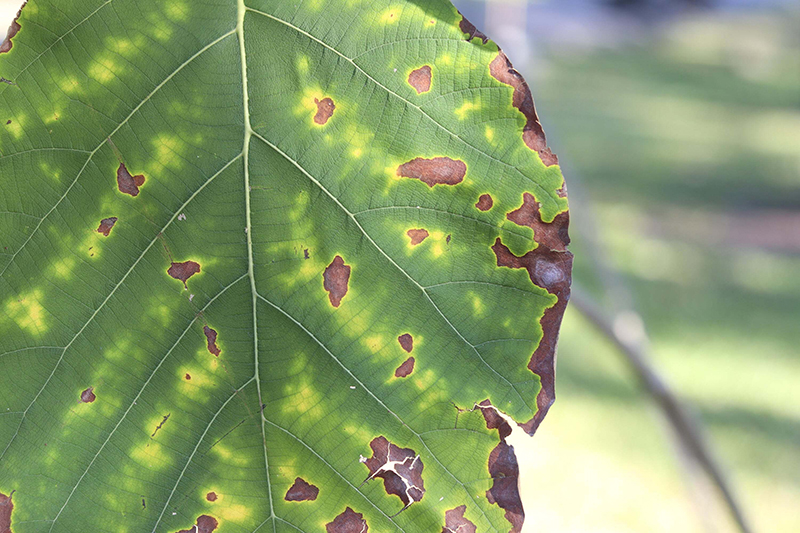
The Mills’ way to fix common issues
Soft or RO water chaos → start with CalMag
Soft water has good manners but no backbone. CalMag supplies the calcium and magnesium your plant needs for chlorophyll, photosynthesis, and firm structure. A&B already includes calcium and magnesium. Use CalMag as a targeted supplement, especially when pH trends below 6.3, and correct pH into range. Watch interveinal yellowing ease off and pH drift calm down.

You needed signs: yellow between veins on newer leaves, slow growth, stubborn pH, and brown spotting where calcium runs short.
Guide rates: 1 ml CalMag per 1 L tap water (EC ~0.7) or 2 ml per 1 L osmosis water (EC 0.0), once per week
Result: greener new growth, steadier pH behaviour, and fewer mystery stalls.
Weak establishment and transplant shock → Start R
Seedlings and fresh transplants want energy without bloat. Start R is a biostimulant that blends dual nitrogen plus humic substances, amino acids, and seaweed extracts that support rooting and recovery. It helps roots branch, steadies young growth, and shortens the sulk after you move them.
Use it: from seed through veg into early bloom while sites form.
Result: tighter internodes, cleaner colour, and fewer lost days.
Uptake under pressure → Vitalize
Silicon only helps when the plant can use it. Vitalize supplies bioavailable silicic acid to reinforce cell walls, steady canopy posture, and keep responses calm under heat or handling. It also supports efficient use of the rest of your feed.
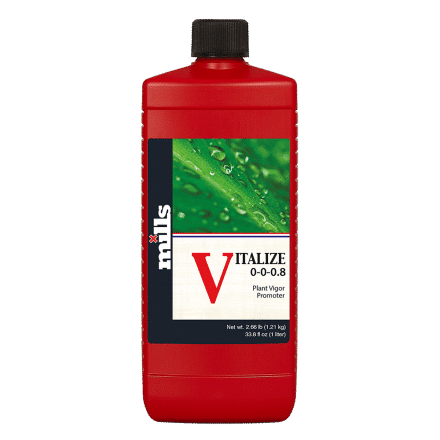
How to run it: add Vitalize first, then build the rest. 2 ml per 10 L in growth, then 1 ml per 10 L from week five of bloom. Result: clearer set, healthier momentum.
Bloom energy and poor set → C4
Early flowers decide everything. C4 helps move carbohydrates and nutrients to forming sites and nudges the base profile toward the phosphorus and potassium those weeks need.
Use it: early to mid bloom alongside your base.
Result: clearer set, healthier momentum, and a canopy that builds rather than dithers.
Finish with intent → Ultimate PK
Late bloom wants fast access to the correct form of P and K. Ultimate PK uses a phosphite-driven approach for clean maturation, firmer flowers, and lifted aroma.
Use it with C4 in weeks five and six, then finish with Ultimate PK alone.
Result: denser sets and a tidy finish without stress.
Clean mixing order (tattoo this on the tank)
Add Vitalize first. Stabilise the base with CalMag if needed, then A, then B. Finish with C4 or Ultimate PK, depending on the week.
That order protects the chemistry, keeps availability high, and makes your notes repeatable.
Tiny flowchart you will use every week
- Leaves look off.
- Check pH and EC. Fix if needed.
- Check water profile. Add CalMag if soft or RO.
- Rebuild a stage correct mix in the proper order.
- Log changes. Watch for new growth recovery.
Quick reference: symptoms to action
- Bottom up pale: raise base feed sensibly and confirm pH.
- Edges burnt on older leaves: review EC, add K support in bloom, keep temperatures steady.
- New growth crinkled or dying back: get CalMag in first, then rebuild feed.
- Top yellow, veins green: Check iron availability and pH, and steady the base.
- Speckled young leaves: confirm manganese availability with correct pH and a balanced base.
Keep the wins
Deficiency work is not glamorous, but it is where real growers win. Keep notes. Photograph leaves. Record pH and EC at the mix and after 24 hours. The diary is your superpower. If a change works, you can repeat it. If it does not, you will see why.
